


Enhancement of parthenocarpy and fruit set through genome editing in tomato variety for processing use
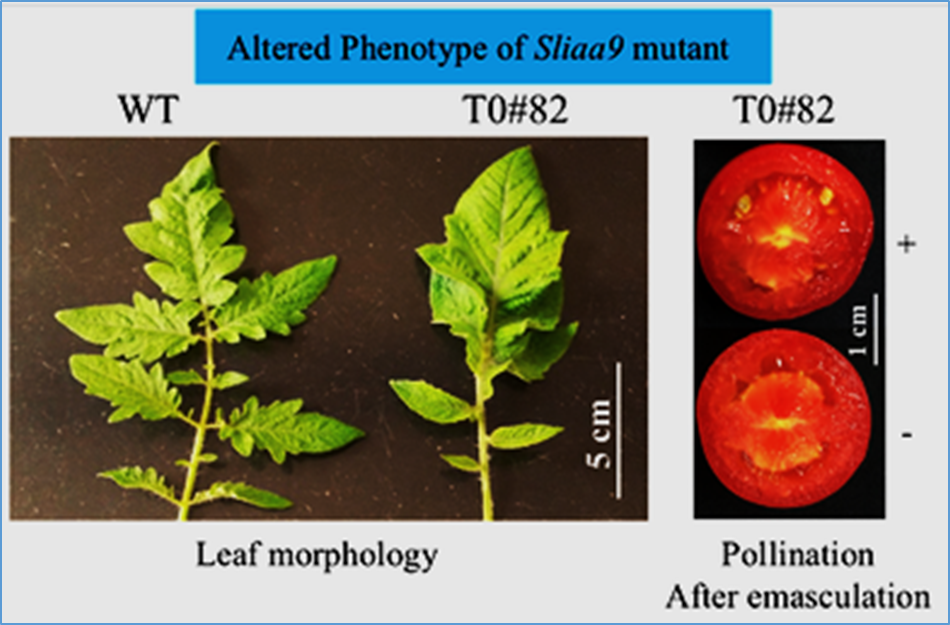
Tomatoes are extremely important plants that are cultivated worldwide, with various varieties grown in different regions. The traits required can vary depending on the region and intended use. Parthenocarpy, a trait that confers numerous advantages, reduces the labor required for pollination and minimizes the incidence of poor fruit set owing to temperature fluctuations. Mutations in SlIAA9 induce parthenocarpy in tomatoes, and the introduction of this trait into processed varieties via genome editing suggests its potential to markedly shorten the breeding timeline. Genome editing has gained considerable attention as a breeding technique because it enables precise mutations in specific genes. However, only a few recent studies have reported examples of genome editing in Japanese tomato varieties for processing. In this study, we employed a genome-editing technique targeting SlIAA9 to induce parthenocarpy in the Japanese tomato variety Natsunokoma for processing purposes, thereby reducing the labor required for pollination. The null-segregant Sliaa9 mutant exhibited enhanced parthenocarpy and fruit set. These results suggest that improvements in fruit-bearing and parthenocarpic traits enhance the quality of tomato varieties that are mainly used for processing.
See: https://www.jstage.jst.go.jp/article/plantbiotechnology/43/1/43_25.1003a/_article/-char/ja/
Views: 7