


Genome-wide association study of soybean germplasm derived from modern Canadian and Chinese soybean cultivars to identify novel genes conferring soybean cyst nematode resistance
Scott Moore, Owen Wally, Albert Tenuta, Mohsen Yoosefzadeh Najafabadi, Christopher Grainger, Milad Eskandari & Istvan Rajcan
TAG; April 29 2026; vol. 137; article 141.
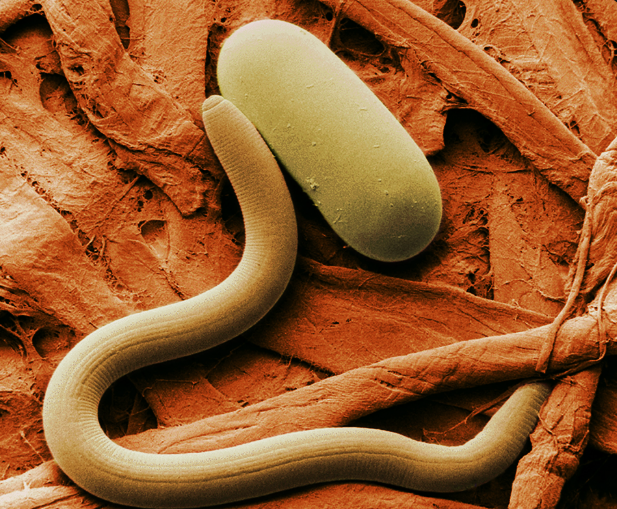
Figure: Soybean Cyst Nematode
Key message
Developing genetically resistant soybean cultivars is key in controlling the most damaging soybean disease worldwide; soybean cyst nematode (SCN) is critical for soybean production. Development and spread of new HG types of SCN that break down current resistance genes warrant continuous efforts to identify novel resistance sources. Here, a GWAS study in a diversity panel consisting of modern Canadian and Chinese soybean cultivars was used to identify novel marker–trait associations in the soybean genome derived from Chinese germplasm.
Abstract
Soybean cyst nematode (SCN), caused by Heterodera glycines Ichinohe, is the most destructive pathogen affecting soybean production in North America. Overreliance on plant introduction (PI) 88788 as a resistance source in commercial soybean cultivars has led to SCN field populations shifting toward virulence against this resistance source. Modern Chinese soybean cultivars have emerged as potential sources of both known and novel SCN resistance genes. This study aimed to investigate the genetics underlying HG-type 2.5.7 SCN resistance in a genomic diversity panel (n = 201) comprised of modern Canadian (CD), Chinese (CH), and combined CD-CH soybean genotypes through a genome-wide association study (GWAS). Genotyping-by-sequencing (GBS) detected 15,932 single nucleotide polymorphisms (SNPs). Phenotypic SCN resistance was assessed by infesting genotypes in the GWAS panel using a greenhouse bioassay with HG-type 2.5.7 to calculate the female index (FI). FarmCPU detected one SNP on chromosome 9, explaining 7.26% of phenotypic variation in SCN resistance, while BLINK identified the same chromosome 9 SNP at 35.15% and two additional ones on chromosomes 8 and 13, explaining 24.81 and 15.92% variation, respectively. Alternative alleles for these SNPs were contributed by CH and CD-CH genotypes. Three candidate genes were identified in this study, in which Glyma.09g238800 appears to be the strongest, but verification is warranted in future research. The significant SNPs identified in this study show the genetic utility of modern Chinese soybean germplasm in developing soybean cultivars with alternative SCN resistance genes to enhance the sustainability of developing SCN-resistant soybean cultivars in North America.
See https://link.springer.com/article/10.1007/s00122-026-05243-4
Views: 27